



Array
(
    [0] => 6435
    [1] => 5087
    [2] => 5338
    [3] => 18143
    [4] => 18359
)

Young Boys: the fourth Swiss team PAOK will face

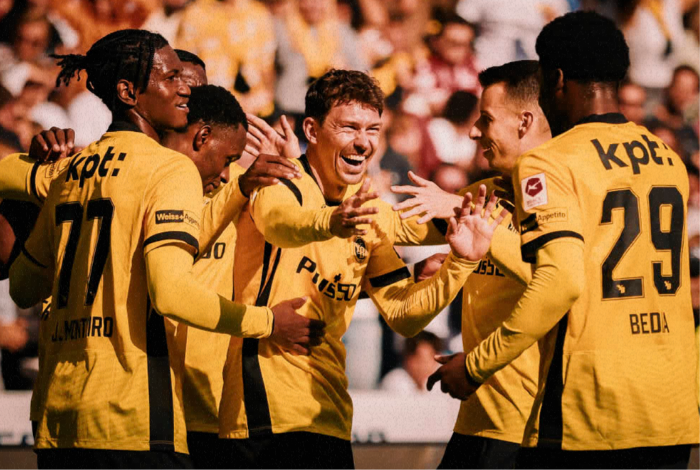
A team from the capital of Switzerland, Bern, Berner Sport Club Young Boys has celebrated 17 league championships and eight Swiss Cups, one Super Cup, three doubles, as well as a participation in the semi-finals of the European Cup (now the Champions League), back in 1959. PAOK’s opponents on Matchday 4 of the League Phase of the Europa League are a traditional Swiss force, with an average age of just 25.7 years and some notable performances in European competitions over the years.

06.11.2025

The Swiss are coming to Thessaloniki with a new coach. Giorgio Contini has left, Gerry Seoane has come in. An old acquaintance, as he was the coach of Young Boys from 2018 to 2021, winning three championships and a Swiss Cup.

  • After three games in the League Phase, Young Boys have two wins (2-0 away against FCSB, 3-2 at home against Ludogorets) and one loss (1-4 at home against Panathinaikos). They are in 13th place with six points, while it should be remembered that PAOK are 20th with four points.
  • In its history with Swiss teams, PAOK has four wins, one draw, and one loss. In 1978-79, they played against Servette in the Cup Winners’ Cup (2-0 home, 4-0 away). In 2002-03, they played against Grasshoppers in the UEFA Cup (2-1 at the Toumba, 1-1 in Switzerland) and in the 2018-19 season, in the 2nd qualifying round of the Champions League, they faced Basel (2-1 home, 0-3 away).
  • In 2018, Young Boys entered the Champions League groups for the first time, in 2021 they reached the “Round of 16” of the Europa League. In the 2023-24 season, they were crowned domestic champions, but last season they moved rather towards mediocrity, ultimately taking third place.
  • The last time PAOK played a Swiss team was in 2018 against Basel in the Europa League group stage. They lost 2-1 in Thessaloniki and won 3-2 in Switzerland.
  • The club was founded on March 14, 1898 by a group of students from the University of Bern. After a friendly match with the Old Boys of neighboring Basel, they decided to give themselves an English name. They ended up with Young Boys and chose yellow and black as their colors.
  • In the first quarter of the 20th century, they won five championships. Their «golden era» is considered to be from 1951 to 1964. In the 1958–59 season they qualified for the semi-finals of the European Cup (they were eliminated by Reims) and, among other things, doubled the capacity of its stadium from 30,000 to 60,000.
  • In 1913, the English football coach Reynold Williams became the club’s first coach. Shortly afterwards, World War I broke out and the Spitalacker-Platz (the square where it had played since 1904) was turned into a potato field.
  • In October 1925, the new Wankdorf Stadium was inaugurated. In total, the new stadium held 22,000 spectators, including a covered standing area for 5,000. Over time, its capacity was increased, and for the 1954 World Cup, the stadium was expanded from 30,000 seats to 60,000!
  • The 1954 World Cup final between Germany and Hungary (3-2) was held in this stadium.
  • The most successful coach in the club’s history is Albert Singh, who took over the team in 1951 and left in 1964.
  • One of the greatest Swiss footballers, Stéphane Chapuisat played for Young Boys from 2002 to 2005. He made 100 appearances and scored 53 goals.
  • In the mid-1990s, the team was plagued by financial problems and in 1997 – for the first time since the 1946–47 season – they were relegated to the National League B (now the Challenge League).
  • In 2002, with Rafael Vicky at the helm, they won the domestic double. Vicky was sacked in 2024 and was replaced by Patrick Ramen, who was sacked just 99 days later, as the team collected six points from nine matches, the team’s worst start to a league season in the 21st century.
  • Since 2005, Young Boys have played their home games at the Wankdorf Stadium, with a capacity of 31,120 spectators. It is the second largest football stadium in Switzerland, after St. Jakob-Park. Between 2005 and 2020, the stadium was renamed Stade de Suisse Wankdorf. However, as one of the few stadiums with artificial turf, national team matches are rarely held there.
  • The stadium is the largest solar power plant in the world! There are enough solar cells on its roof to produce 700,000 kWh. This requires around 300,000 square meters of panels, or 30 hectares. The electricity supplies the stadium and some houses around the Wankdorf area.
  • Torestart took place on April 28, 2018, after a 2-1 home win over Lucerne, which crowned them champions of the 2017-18 season, after 32 years! In 2019 they secured the 13th title in the team’s history, the following season they won the double (third championship in a row and seventh Cup, the first in 30 years). They also won the championship in the 2020-21 season.
  • In August 2018, they qualified for the UEFA Champions League group stage for the first time in their history, after defeating Dinamo Zagreb 3-2 on aggregate in the play-offs.

Relevant News

Young Boys: the fourth Swiss team PAOK will face

A team from the capital of Switzerland, Bern, Berner Sport Club Young Boys has celebrated 17 league championships and eight Swiss Cups, one Super Cup, three doubles, as well as a participation in the semi-finals of the European Cup (now the Champions League), back in 1959. PAOK’s opponents on Matchday 4 of the League Phase of the Europa League are a traditional Swiss force, with an average age of just 25.7 years and some notable performances in European competitions over the years.

06.11.2025

The Swiss are coming to Thessaloniki with a new coach. Giorgio Contini has left, Gerry Seoane has come in. An old acquaintance, as he was the coach of Young Boys from 2018 to 2021, winning three championships and a Swiss Cup.

  • After three games in the League Phase, Young Boys have two wins (2-0 away against FCSB, 3-2 at home against Ludogorets) and one loss (1-4 at home against Panathinaikos). They are in 13th place with six points, while it should be remembered that PAOK are 20th with four points.
  • In its history with Swiss teams, PAOK has four wins, one draw, and one loss. In 1978-79, they played against Servette in the Cup Winners’ Cup (2-0 home, 4-0 away). In 2002-03, they played against Grasshoppers in the UEFA Cup (2-1 at the Toumba, 1-1 in Switzerland) and in the 2018-19 season, in the 2nd qualifying round of the Champions League, they faced Basel (2-1 home, 0-3 away).
  • In 2018, Young Boys entered the Champions League groups for the first time, in 2021 they reached the “Round of 16” of the Europa League. In the 2023-24 season, they were crowned domestic champions, but last season they moved rather towards mediocrity, ultimately taking third place.
  • The last time PAOK played a Swiss team was in 2018 against Basel in the Europa League group stage. They lost 2-1 in Thessaloniki and won 3-2 in Switzerland.
  • The club was founded on March 14, 1898 by a group of students from the University of Bern. After a friendly match with the Old Boys of neighboring Basel, they decided to give themselves an English name. They ended up with Young Boys and chose yellow and black as their colors.
  • In the first quarter of the 20th century, they won five championships. Their «golden era» is considered to be from 1951 to 1964. In the 1958–59 season they qualified for the semi-finals of the European Cup (they were eliminated by Reims) and, among other things, doubled the capacity of its stadium from 30,000 to 60,000.
  • In 1913, the English football coach Reynold Williams became the club’s first coach. Shortly afterwards, World War I broke out and the Spitalacker-Platz (the square where it had played since 1904) was turned into a potato field.
  • In October 1925, the new Wankdorf Stadium was inaugurated. In total, the new stadium held 22,000 spectators, including a covered standing area for 5,000. Over time, its capacity was increased, and for the 1954 World Cup, the stadium was expanded from 30,000 seats to 60,000!
  • The 1954 World Cup final between Germany and Hungary (3-2) was held in this stadium.
  • The most successful coach in the club’s history is Albert Singh, who took over the team in 1951 and left in 1964.
  • One of the greatest Swiss footballers, Stéphane Chapuisat played for Young Boys from 2002 to 2005. He made 100 appearances and scored 53 goals.
  • In the mid-1990s, the team was plagued by financial problems and in 1997 – for the first time since the 1946–47 season – they were relegated to the National League B (now the Challenge League).
  • In 2002, with Rafael Vicky at the helm, they won the domestic double. Vicky was sacked in 2024 and was replaced by Patrick Ramen, who was sacked just 99 days later, as the team collected six points from nine matches, the team’s worst start to a league season in the 21st century.
  • Since 2005, Young Boys have played their home games at the Wankdorf Stadium, with a capacity of 31,120 spectators. It is the second largest football stadium in Switzerland, after St. Jakob-Park. Between 2005 and 2020, the stadium was renamed Stade de Suisse Wankdorf. However, as one of the few stadiums with artificial turf, national team matches are rarely held there.
  • The stadium is the largest solar power plant in the world! There are enough solar cells on its roof to produce 700,000 kWh. This requires around 300,000 square meters of panels, or 30 hectares. The electricity supplies the stadium and some houses around the Wankdorf area.
  • Torestart took place on April 28, 2018, after a 2-1 home win over Lucerne, which crowned them champions of the 2017-18 season, after 32 years! In 2019 they secured the 13th title in the team’s history, the following season they won the double (third championship in a row and seventh Cup, the first in 30 years). They also won the championship in the 2020-21 season.
  • In August 2018, they qualified for the UEFA Champions League group stage for the first time in their history, after defeating Dinamo Zagreb 3-2 on aggregate in the play-offs.

Relevant News

Young Boys: the fourth Swiss team PAOK will face

A team from the capital of Switzerland, Bern, Berner Sport Club Young Boys has celebrated 17 league championships and eight Swiss Cups, one Super Cup, three doubles, as well as a participation in the semi-finals of the European Cup (now the Champions League), back in 1959. PAOK’s opponents on Matchday 4 of the League Phase of the Europa League are a traditional Swiss force, with an average age of just 25.7 years and some notable performances in European competitions over the years.

06.11.2025

The Swiss are coming to Thessaloniki with a new coach. Giorgio Contini has left, Gerry Seoane has come in. An old acquaintance, as he was the coach of Young Boys from 2018 to 2021, winning three championships and a Swiss Cup.

  • After three games in the League Phase, Young Boys have two wins (2-0 away against FCSB, 3-2 at home against Ludogorets) and one loss (1-4 at home against Panathinaikos). They are in 13th place with six points, while it should be remembered that PAOK are 20th with four points.
  • In its history with Swiss teams, PAOK has four wins, one draw, and one loss. In 1978-79, they played against Servette in the Cup Winners’ Cup (2-0 home, 4-0 away). In 2002-03, they played against Grasshoppers in the UEFA Cup (2-1 at the Toumba, 1-1 in Switzerland) and in the 2018-19 season, in the 2nd qualifying round of the Champions League, they faced Basel (2-1 home, 0-3 away).
  • In 2018, Young Boys entered the Champions League groups for the first time, in 2021 they reached the “Round of 16” of the Europa League. In the 2023-24 season, they were crowned domestic champions, but last season they moved rather towards mediocrity, ultimately taking third place.
  • The last time PAOK played a Swiss team was in 2018 against Basel in the Europa League group stage. They lost 2-1 in Thessaloniki and won 3-2 in Switzerland.
  • The club was founded on March 14, 1898 by a group of students from the University of Bern. After a friendly match with the Old Boys of neighboring Basel, they decided to give themselves an English name. They ended up with Young Boys and chose yellow and black as their colors.
  • In the first quarter of the 20th century, they won five championships. Their «golden era» is considered to be from 1951 to 1964. In the 1958–59 season they qualified for the semi-finals of the European Cup (they were eliminated by Reims) and, among other things, doubled the capacity of its stadium from 30,000 to 60,000.
  • In 1913, the English football coach Reynold Williams became the club’s first coach. Shortly afterwards, World War I broke out and the Spitalacker-Platz (the square where it had played since 1904) was turned into a potato field.
  • In October 1925, the new Wankdorf Stadium was inaugurated. In total, the new stadium held 22,000 spectators, including a covered standing area for 5,000. Over time, its capacity was increased, and for the 1954 World Cup, the stadium was expanded from 30,000 seats to 60,000!
  • The 1954 World Cup final between Germany and Hungary (3-2) was held in this stadium.
  • The most successful coach in the club’s history is Albert Singh, who took over the team in 1951 and left in 1964.
  • One of the greatest Swiss footballers, Stéphane Chapuisat played for Young Boys from 2002 to 2005. He made 100 appearances and scored 53 goals.
  • In the mid-1990s, the team was plagued by financial problems and in 1997 – for the first time since the 1946–47 season – they were relegated to the National League B (now the Challenge League).
  • In 2002, with Rafael Vicky at the helm, they won the domestic double. Vicky was sacked in 2024 and was replaced by Patrick Ramen, who was sacked just 99 days later, as the team collected six points from nine matches, the team’s worst start to a league season in the 21st century.
  • Since 2005, Young Boys have played their home games at the Wankdorf Stadium, with a capacity of 31,120 spectators. It is the second largest football stadium in Switzerland, after St. Jakob-Park. Between 2005 and 2020, the stadium was renamed Stade de Suisse Wankdorf. However, as one of the few stadiums with artificial turf, national team matches are rarely held there.
  • The stadium is the largest solar power plant in the world! There are enough solar cells on its roof to produce 700,000 kWh. This requires around 300,000 square meters of panels, or 30 hectares. The electricity supplies the stadium and some houses around the Wankdorf area.
  • Torestart took place on April 28, 2018, after a 2-1 home win over Lucerne, which crowned them champions of the 2017-18 season, after 32 years! In 2019 they secured the 13th title in the team’s history, the following season they won the double (third championship in a row and seventh Cup, the first in 30 years). They also won the championship in the 2020-21 season.
  • In August 2018, they qualified for the UEFA Champions League group stage for the first time in their history, after defeating Dinamo Zagreb 3-2 on aggregate in the play-offs.